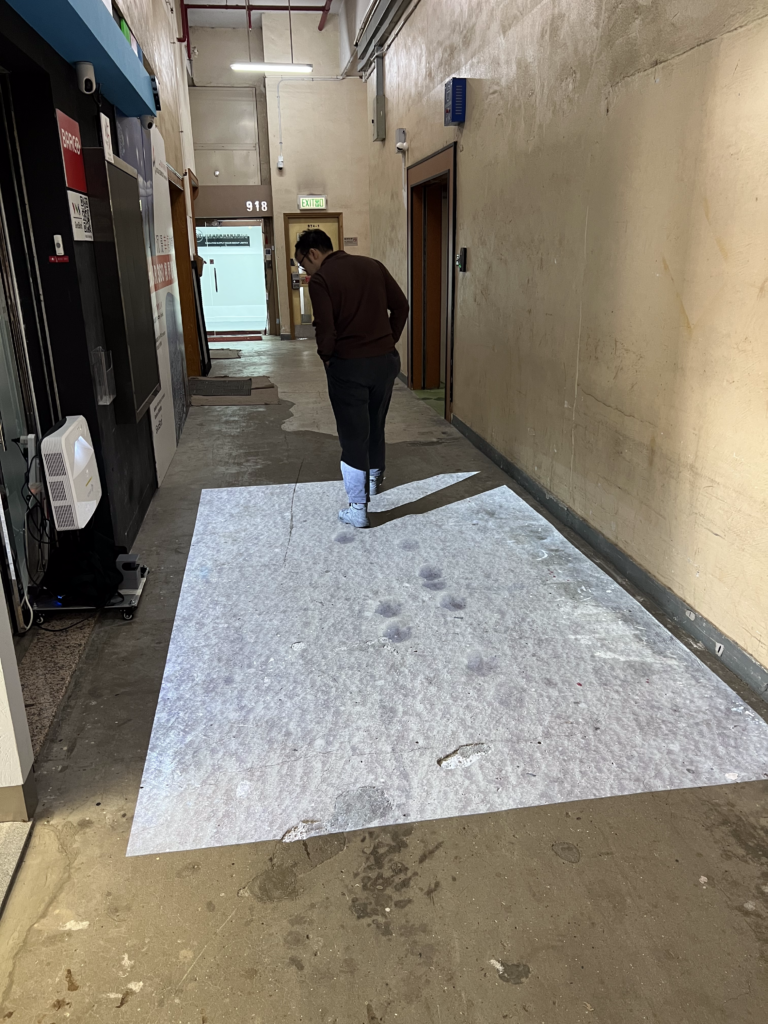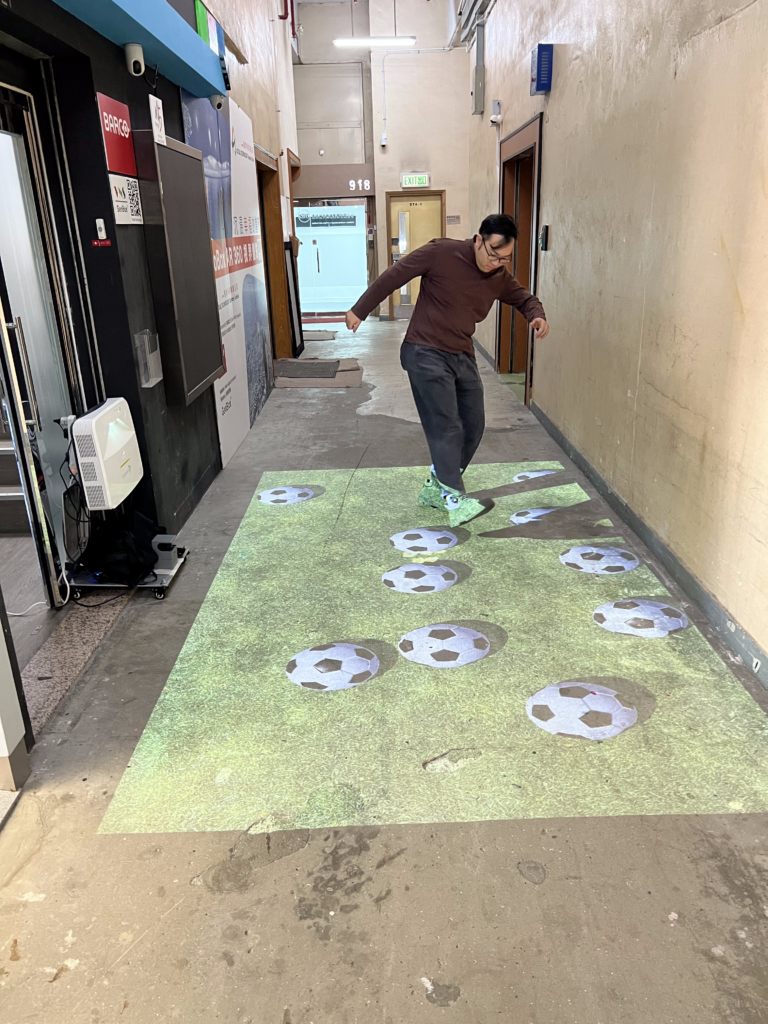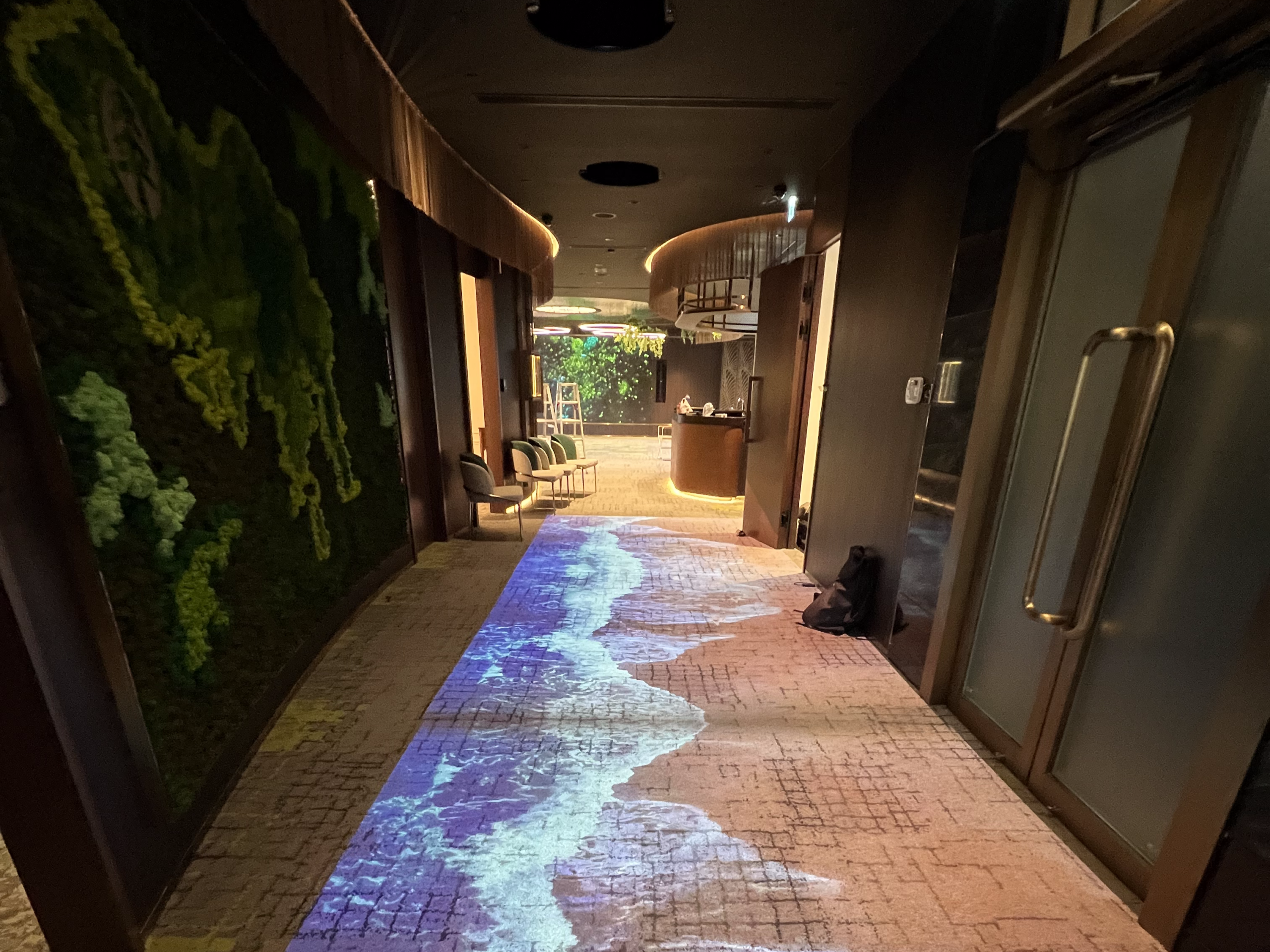
Floor Projection (also known as ground or floor-based projection) is one of the most versatile and engaging elements in immersive projection systems. By projecting high-resolution content directly onto the floor surface, it allows users to physically step into, walk across, or interact with the visuals using their feet and body movements — creating an immediate and intuitive sense of “being inside the content.”
Key Advantages and Characteristics
- Exceptional Flexibility and Adaptability: Floor projection requires minimal structural changes — only a flat, even surface is needed (ideally treated with high-gain projection paint, specialized flooring, or anti-slip mats for optimal image quality and durability). It can be deployed quickly as a standalone feature or integrated into larger setups.
- Ideal for Dynamic and Temporary Scenarios: Perfect for events, corridors, exhibitions, retail spaces, or brand activations where content needs to change frequently or adapt to different themes.
- Boosts Overall Immersion When Combined: When paired with wall projections (e.g., three-wall CAVE or curved screens), floor projection completes the vertical and horizontal envelopment, making the environment feel truly three-dimensional and spatially coherent.
- Interaction-Ready by Design: Easily combined with infrared, radar, or laser sensing technologies so that footsteps, jumps, or gestures trigger real-time responses — such as ripples in virtual water, blooming flowers, exploding particles, or interactive paths.
Typical Applications
- Events & Exhibitions: Corridors, booths, pop-up stores, or brand experience zones to attract attention and extend dwell time.
- Education & Therapy: Kindergarten and primary school classrooms for motor-skill games, science simulations, or sensory integration; rehabilitation centers for gait training, balance exercises, or attention/focus activities.
- Commercial & Public Spaces: Shopping malls, hotel lobbies, restaurants, or museums as dynamic wayfinding, interactive art, or thematic flooring.
- Entertainment & Cultural Venues: Children’s museums, science centers, or themed exhibitions for exploratory and playful learning.