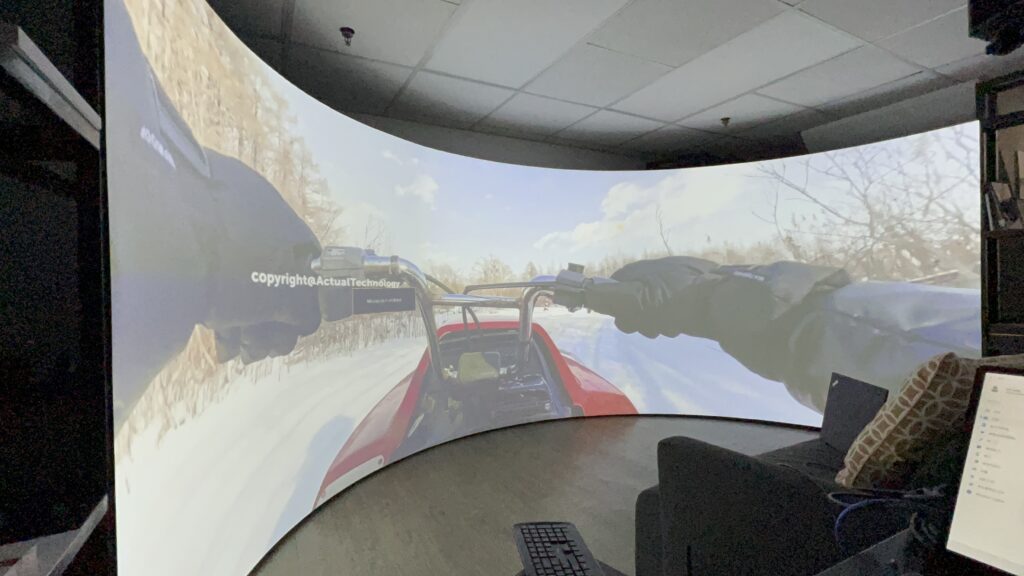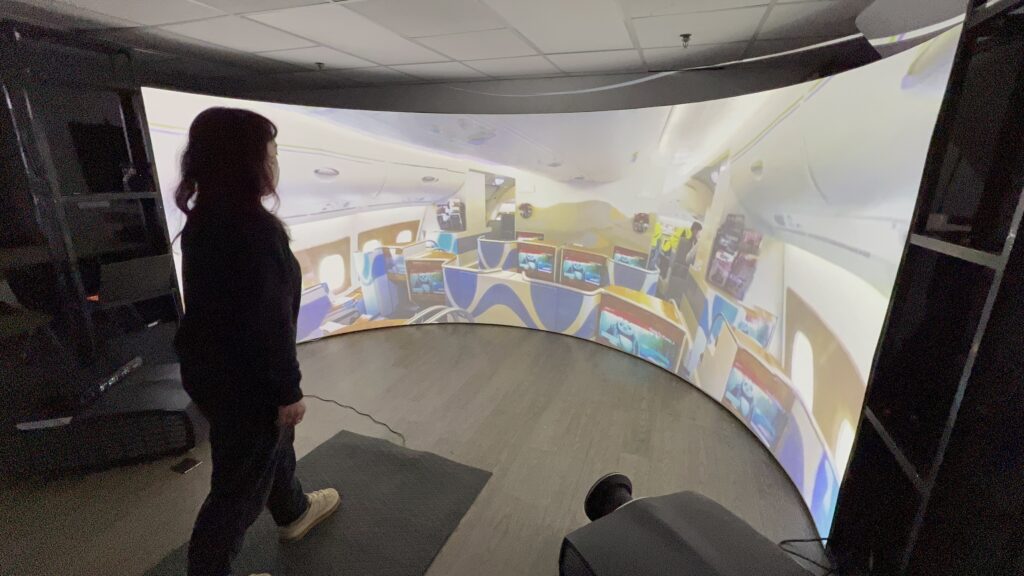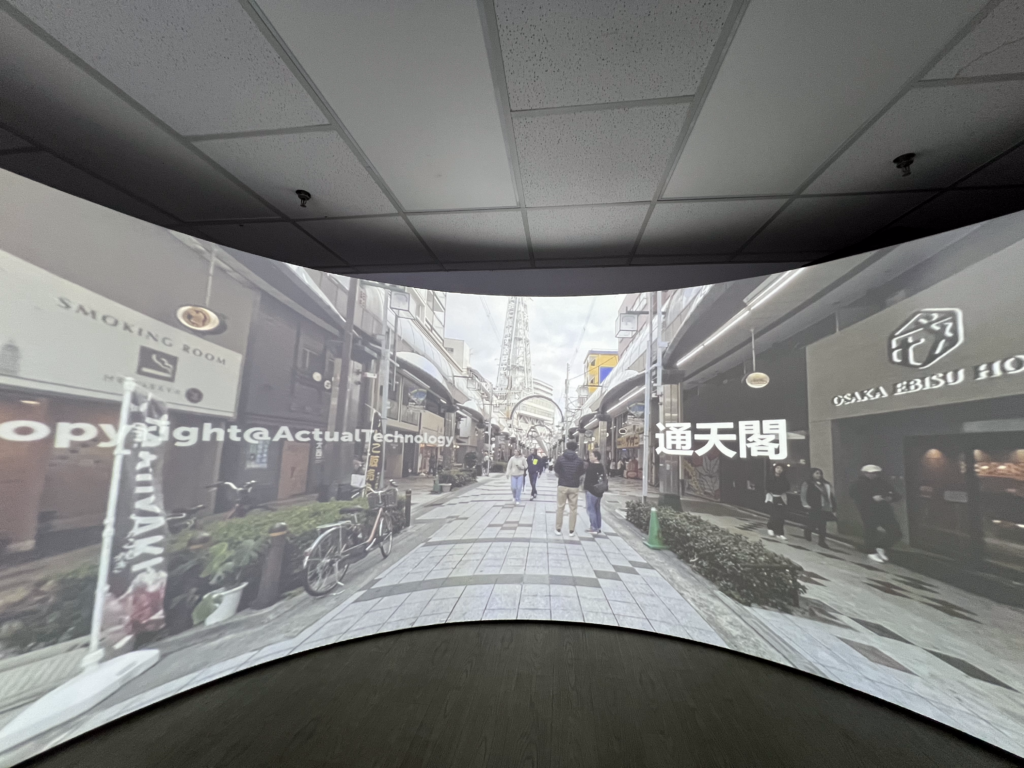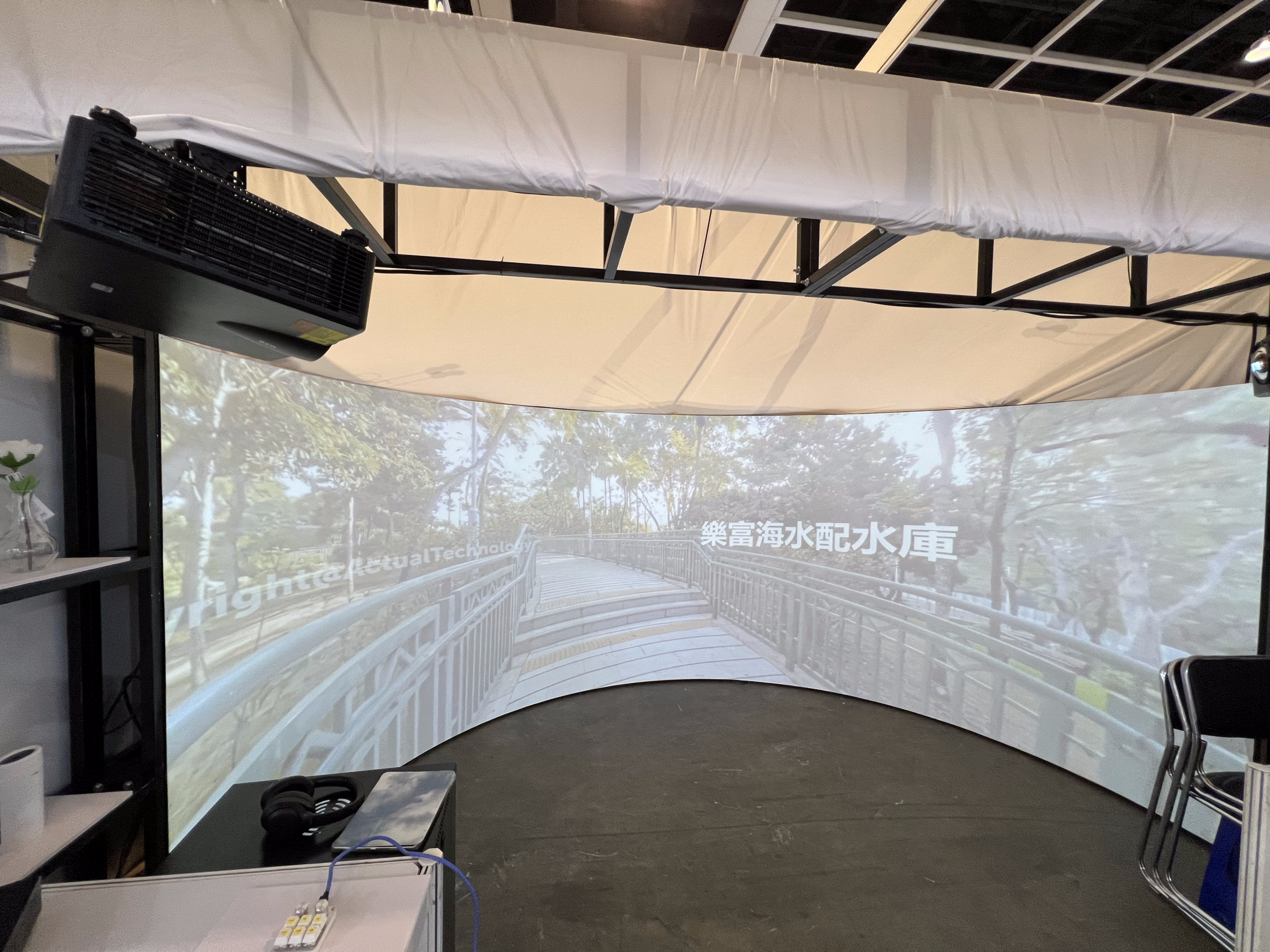
The VR 360 Curve Screen approach uses a large, precisely curved projection surface (typically spanning 150°–360° horizontally) to present true 360-degree content captured by cameras such as Insta360, GoPro MAX, RICOH THETA, or professional 360 rigs. This creates a panoramic, VR-like experience without the need for headsets.
Core Technical Features:
- Curved Projection Surface: Custom-built curved screen (or wall treated with high-gain projection material) with calculated curvature to maintain consistent focus distance and minimize peripheral distortion.
- Content Type: Primarily real-world 360° video/photos (monoscopic or stereoscopic), stitched and mapped to fill the viewer’s natural field of view.
- Projection Setup: Usually 3–6 high-resolution projectors (e.g., WUXGA or 4K models) with short-throw or standard lenses, edge-blended for seamlessness.
- Viewing Experience: Viewers stand or sit centrally or slightly forward, experiencing near-180°–220° effective comfortable field of view with strong peripheral engagement.
Key Advantages:
- True Headset-Free VR Sensation: Eliminates motion sickness, headset weight, hygiene concerns, and social isolation — ideal for shared group viewing.
- Exceptional Realism for Real-World Content: Real captured 360° footage (travel destinations, cultural sites, nature documentaries, event recordings, factory tours, etc.) appears lifelike and spatially accurate.
- High Visual Impact: Curved geometry dramatically enhances depth perception, scale, and immersion compared to flat screens.
- Collective Experience: Multiple people can share the same high-quality panoramic view simultaneously, making it perfect for guided tours, presentations, or exhibitions.
Common Real-World Applications:
- Museums & Heritage Sites: Virtual walkthroughs of historical landmarks, archaeological sites, or cultural festivals.
- Tourism & Visitor Centers: Immersive previews of destinations, national parks, underwater worlds, or space exploration.
- Brand & Corporate Showrooms: Product experience zones, brand storytelling, luxury travel promotions, automotive configurators.
- Large Lecture Halls & Auditoriums: Enhanced keynote presentations, documentary screenings, or virtual field trips.
Advantages Over LED Walls or Video Walls
Immersive projection offers distinct benefits in many scenarios:
- Envelopment & Immersion: Covers multiple surfaces (walls + floor), providing true 360-degree surround experience. LED/video walls are usually limited to flat, single-plane displays.
- Surface Flexibility: Projects effectively on flat, curved, irregular, or even non-planar surfaces. LED panels require precise flat alignment and are less adaptable to complex geometries.
- Cost-Effectiveness for Large Areas: In bigger installations, the cost of projectors and setup is often more favorable than equivalent LED resolution and coverage.
- Creative Freedom: Supports advanced projection mapping and multi-surface content blending, enabling highly imaginative and site-specific visuals.